1. The Morning Nightmare
It’s a freezing morning. You turn the key. Or push the start button. Instead of your engine roaring to life, you hear a sad clicking sound. Your dashboard lights dim. Or everything goes dark. You’re late. You’re frustrated. Your car was fine yesterday. Now it won’t start. Please review this comprehensive breakdown of factors that cause a car battery to drain.
Here’s the truth that saves money and headaches:
Winter doesn’t kill good batteries. It exposes weak ones.
When your battery dies in cold weather, the cold isn’t usually the real problem. It’s the moment a tired battery gets caught. This article explains why it happens. Why short drives are often the true culprit. Why “tested fine” can trick you. And what really prevents those awful no-start mornings.
Looking for more winter car care tips? Check out our complete winter car survival guide.
2. HOW COLD AFFECTS BATTERIES (The Cold Truth)
What Cold Cranking Amps (CCA) really means
Cold Cranking Amps (CCA) is simple. It measures how much starting power a battery can give in cold weather. Higher CCA means more power when it’s freezing. This matters because cold makes starting harder.
Why cold makes batteries weak
Batteries make power through chemical reactions. Cold slows these reactions down. When chemistry slows, batteries can’t deliver power well. Even if they were already worn out.
At the same time, your engine needs more effort to turn over when cold:
- Engine oil thickens, making the engine harder to turn
- Metal parts fit tighter when cold, adding drag
- The starter motor works harder, needing more power
Cold weather gives you a double hit:
- Your battery gives less power
- Your engine needs more power
That’s why a battery that works fine in summer fails in winter. The cold didn’t kill it. The cold showed it had less power than you thought.
3. SHORT TRIPS: THE BATTERY KILLER
This is where most winter battery failures start.
Starting uses huge energy
Your starter motor is one of your car’s biggest power hogs. For a few seconds, it pulls a massive surge of power. That energy must go back into the battery after starting.
Why short drives don’t recharge batteries
Your alternator powers your car and recharges the battery. But here’s the catch: alternators aren’t fast chargers. Especially at low speeds. Especially on short drives.
On quick trips, several things work against you:
- The alternator doesn’t run long enough at good output
- Modern cars limit charging to save fuel
- In winter, you use more power (defrost, lights, heated seats), leaving less to recharge the battery
What short trips do over time
If you mostly drive 5-10 minutes in the city, your battery may never fully recover. This leads to chronic undercharging. And undercharging causes sulfation.
Sulfation explained simply: When a battery stays partly empty, hard deposits build up on its plates. These deposits shrink the battery’s capacity. It might show “normal voltage” but store less energy.
This damage builds slowly:
- Week 1: Starts seem fine
- Week 3: Cranking gets slightly slower in the morning
- Week 6: First no-start happens on the coldest day
If you mostly take short trips, this isn’t just theory. It’s a sure path to winter battery failure.
4. WHY “THE BATTERY TESTED FINE” LIES TO YOU
Many people hear “it tested fine” and trust it. Often, the test asked the wrong question.
Voltage ≠ capacity
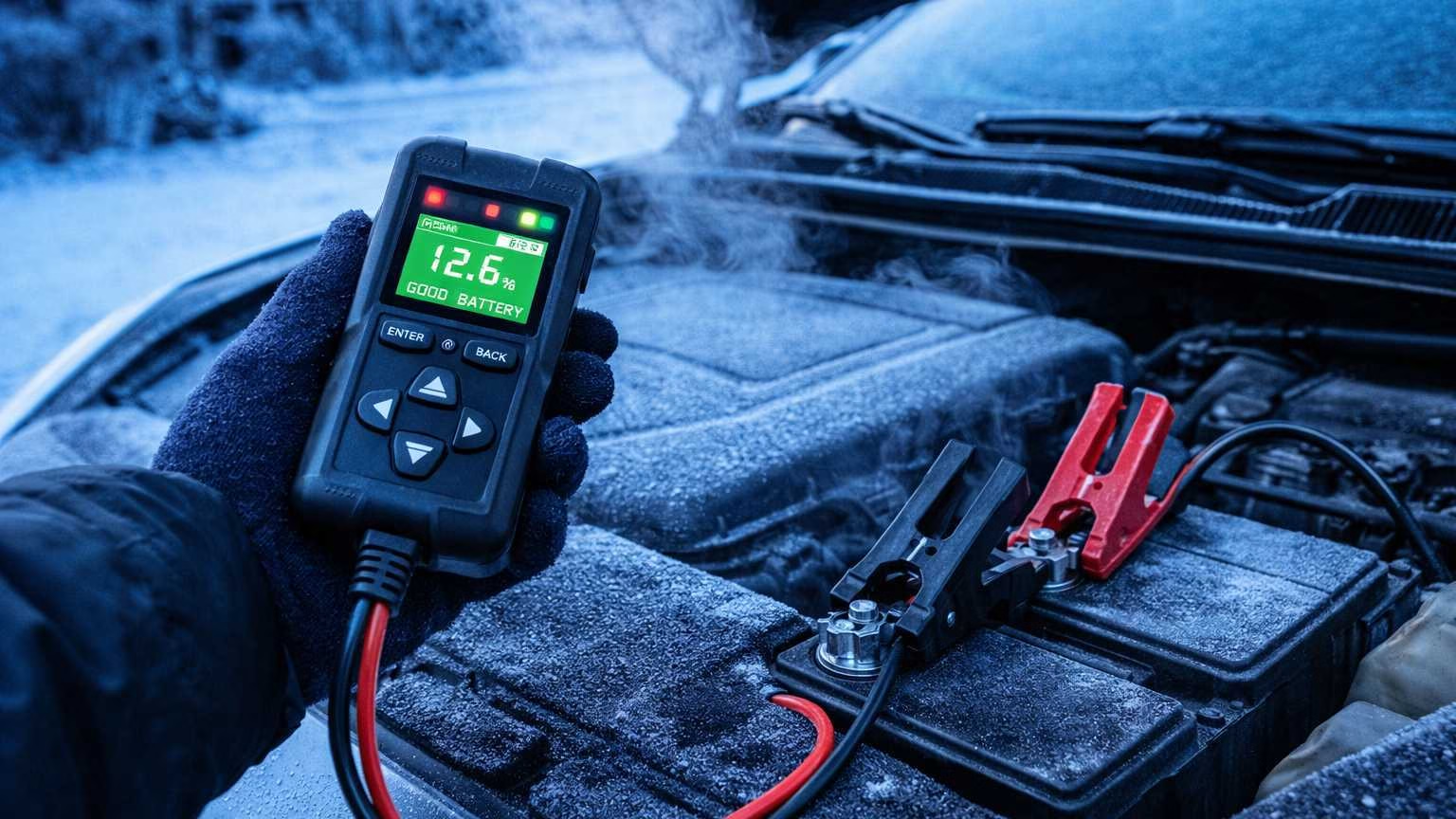
A battery can show 12.6 volts and still fail to start your car.
Why? Voltage only shows current charge level (how full it is now). Not health (how much it can deliver under stress or how much it can store).
Think of it like this:
- Charge level: How much gas is in your tank today
- Health: How big your tank is now compared to when new
A worn battery can “look full” on a voltage check. But its tank has shrunk.
Weak tests that miss real problems
Common quick checks that fool you:
- Parts-store voltage checks: Fast but only show charge level
- Quick load tests without proper setup: Results vary, especially if the battery was just driven
- Tests on undercharged batteries: Good batteries can “fail” when low. Bad batteries can “pass” when freshly charged
What a real test must do
A meaningful test must check the battery under load (simulating starting) or measure internal condition. That’s how you find batteries that “test fine” by voltage but can’t deliver cold starting power.
5. OTHER WINTER DRAINS NO ONE NOTICES
Cold weather doesn’t just stress batteries. It also makes your car demand more from them.
More power hogs
In winter, you use more:
- Rear defroster
- Front defroster (high speed)
- Headlights (more night driving)
- Heated seats and steering wheel
These matter most right after startup. When your battery tries to recover from cranking.
Small drains become big problems
Every modern car uses some power when off (memory settings, security). A healthy battery handles this. A weak one can’t.
Cold makes batteries less capable. So the same small drain can kill it after a few days of sitting.
Aging steals reserve power
As batteries age, they lose reserve capacity. This is the ability to run things and still start later. That’s why older batteries struggle first in winter. Even if they worked fine in summer.
6. THE REAL FIX (HONEST SOLUTIONS)
For fewer winter surprises, focus on two things:
- Confirm your battery’s true condition
- Change habits that keep batteries undercharged
How to properly test a battery
Option A: Get a proper health test
Ask for either:
- A load test (applies heavy load to see how voltage holds)
- A conductance test (estimates internal condition and starting power)
Good tests report more than voltage. They show available starting power compared to the battery’s rating.
Option B: Basic home check
With a multimeter, you can catch obvious problems:
- Resting voltage test (after sitting overnight)
- Around 12.6V: fully charged
- Around 12.4V: partly charged
- 12.2V or less: significantly discharged
Warning: This only shows charge level, not true health.
- Cranking voltage drop
- Watch voltage while starting the car
- Very low voltage during cranking suggests a weak battery
This is just a clue. Not a final diagnosis. A proper load or conductance test is still best.
When to replace your battery
Replace when:
- A proper test shows weak starting power
- The battery is old (3-5 years) and showing symptoms (slow crank, jump-starts, low voltage)
- It won’t hold a full charge after proper charging
Age truth (not alarmist):
- Most car batteries become unreliable around 3-5 years
- If yours is in that range and winter problems start, don’t be surprised. Plan ahead.
Prevention that actually works
- Take longer drives sometimes
If most trips are short, add one longer drive weekly. This gives the alternator time to refill what starting used. - Use a smart battery charger
If your car sits often or you take mostly short trips, a smart charger keeps the battery full without overcharging. A full battery handles cold better and resists sulfation. Check our guide to the best battery maintainers for winter. - Reduce power use after startup
On very cold mornings:- Start the engine first
- Then turn on high-power items (defroster, heated seats)
- Keep connections clean and tight
Crusty battery terminals cause big voltage drops during starting. Clean, tight connections matter more in winter than most realize.
What doesn’t work
Jump-starts and driving “until it charges” aren’t solutions.
A jump-start is an emergency fix. It doesn’t fix a weak battery. It doesn’t guarantee full recharging. If your problem is low capacity, undercharging, or sulfation, it will return. Usually on the next cold morning.
7. COMMON MYTHS (BUSTED)
Myth 1: “Cold weather kills batteries.”
Truth: Cold exposes weak batteries by reducing output and increasing engine demand. Healthy batteries handle cold fine.
Myth 2: “New batteries don’t fail.”
Truth: New batteries can fail from defects, poor charging, or being repeatedly undercharged. “New” isn’t the same as “healthy.”
Myth 3: “If it starts, the battery is fine.”
Truth: A battery can be on the edge for weeks. It may start today and fail tomorrow when temperature drops or the car sits longer.
Myth 4: “Idling recharges the battery.”
Truth: Idling often gives weak charging, especially with winter accessories running. Steady driving works better than extended idling.
8. CONCLUSION (PEACE OF MIND)
If your car battery dies in winter, don’t blame the season alone. Winter is a stress test. It exposes weakness. It doesn’t create it.
Most winter battery failure is predictable:
- A battery already lost capacity
- Short trips kept it undercharged
- Cold weather demanded more than it could give
The good news? Most of this is preventable. A proper health test, fewer repeated short trips, and smart charging habits can stop the cycle. Small changes now mean fewer dead mornings later. You’ll deal with facts, not guesses.
Need help keeping your battery alive this winter? Our winter car care guide covers everything from storage to survival.