Disclaimer: I am an analyst, not an attorney. This guide breaks down complex statutes into plain English for educational purposes. Laws change, and every situation is unique. Consult a local lawyer for specific legal advice.
The “Wiretapping” Trap
You bought a dash cam to protect yourself from insurance scammers and bad drivers. But if you aren’t careful, that same device could get you charged with a felony.
In the eyes of the law, a dash cam with a microphone is a “listening device.”
While video recording is generally legal in the US (because your car is on a public road where people have no “reasonable expectation of privacy”), audio recording is completely different. It falls under federal and state Wiretapping Laws. If you record a private conversation in your car without permission in the wrong state, you aren’t just breaking a rule—you could be committing a crime.
The Core Concept: One-Party vs. Two-Party Consent
To stay legal, you need to know which “Consent Rule” your state follows.
1. One-Party Consent (The Safe Zone)
In most of the US (38 states + D.C.), the law requires One-Party Consent.
- What it means: Only one person in the conversation needs to know it is being recorded.
- The Loophole: That “one person” is YOU.
- As long as you are sitting in the car while the recording happens, you have “consented” to it. You do not need to tell the police officer, the passenger, or the other driver that you are recording audio.
2. Two-Party / All-Party Consent (The Danger Zone)
In roughly 11 states, the law requires All-Party Consent.
- What it means: Everyone in the vehicle must know they are being recorded and agree to it.
- The Risk: If you pick up a passenger in California or Florida and your dash cam records their voice without them knowing, you are liable. This applies even if you are an Uber driver in your own car.
The “Danger Zone” List: Two-Party Consent States
If you drive in any of the states listed below, you must be extremely careful. The “Expectation of Privacy” in a rideshare vehicle is legally debated, but it is never worth the risk of a lawsuit.
| State | Consent Rule | Analyst Note |
|---|---|---|
| California | All-Party | Strict enforcement (Penal Code 632). Notification is mandatory. |
| Florida | All-Party | Strict. Includes “electronic communications”. |
| Illinois | All-Party | Requires consent for private conversations. |
| Pennsylvania | All-Party | Strict wiretapping laws. |
| Massachusetts | All-Party | Bans “secret” recordings. |
| Other Risky States | All-Party / Mixed | Delaware, Maryland, Montana, Nevada, New Hampshire, Washington. (Note: Connecticut & Oregon have complex “mixed” laws. Treat them as Two-Party to be safe). |
Rideshare Rules: Uber & Lyft Terms
Uber and Lyft generally defer to state laws. Their Terms of Service state that drivers must comply with local regulations regarding recording devices.
- Uber: Allows you to register your dash cam in the app. In some markets, once you register, the rider gets a notification on their phone: “Your driver may be recording this ride.” This digital notification helps establish consent.
- Lyft: Requires you to follow local laws. If you are in a Two-Party state, you cannot rely solely on the app; you must ensure the passenger is aware.
The “Privacy” Argument: Passengers often argue they have an “expectation of privacy” in a taxi or Uber. Courts have historically debated this. While a car on a public road is a public space, the interior conversation is often considered private. Do not test this in court. If you are in a Two-Party state, assume the conversation is private and protected.
The Solution: Notification is Consent
If you live in a Two-Party state, you do not have to throw away your dash cam. You just need to prove that the passenger implied consent by entering your vehicle after knowing they were being recorded.
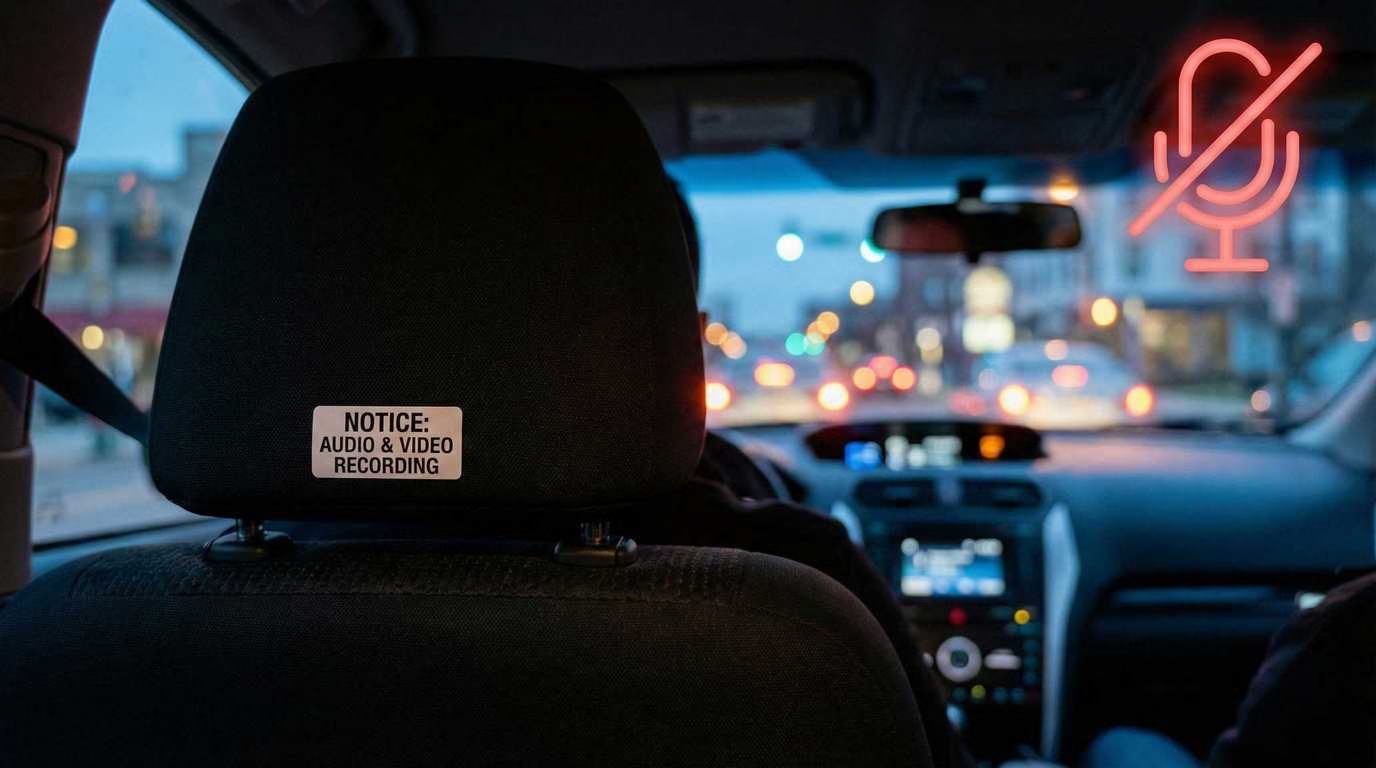
1. The Sticker Strategy (Visual Warning) Place prominent stickers on your rear passenger windows that say:
“NOTICE: AUDIO & VIDEO RECORDING IN PROGRESS” If a passenger sees this sign and chooses to enter your car, they have legally given “implied consent” in many jurisdictions.
2. The Verbal Warning (Best Defense) As they open the door, simply say: “Hi, just so you know, I have a dash cam recording for safety.” If they stay in the car, you are in the clear.
3. Disable Audio (The Nuclear Option) If you pick up a passenger who refuses to be recorded, or if you just want zero risk, turn the microphone off.
Pro Tip: How to Disable Audio Instantly
You don’t need to dig through menus while driving. Most high-end cameras (like those in our Best Dash Cam for Uber guide) have a physical shortcut.
- Viofo (A119/A129/A229): Press the MIC button (usually the triangle icon). A red microphone symbol with a slash will appear on the screen.
- Garmin: Use Voice Control. Say “OK Garmin, Stop Audio.”
- BlackVue/Thinkware: These usually require a dedicated “Audio” button press or a wave of the hand (proximity sensor) on older models.
Note: Video will continue recording, keeping you protected from accidents without violating wiretap laws.
The Verdict
- One-Party State? You are likely safe to record audio without saying a word.
- Two-Party State? Buy the stickers. Register your cam in the Uber app. Give the verbal warning.
- When in doubt? Mute the mic. Video evidence wins accidents; audio evidence wins arguments. Prioritize the video.
For more on discreet options that don’t scream “I’m watching you,” check our guide on the Best Hidden Dash Cams.
Disclaimer: I am an analyst, not an attorney. Laws change. Consult a local lawyer for specific advice.